
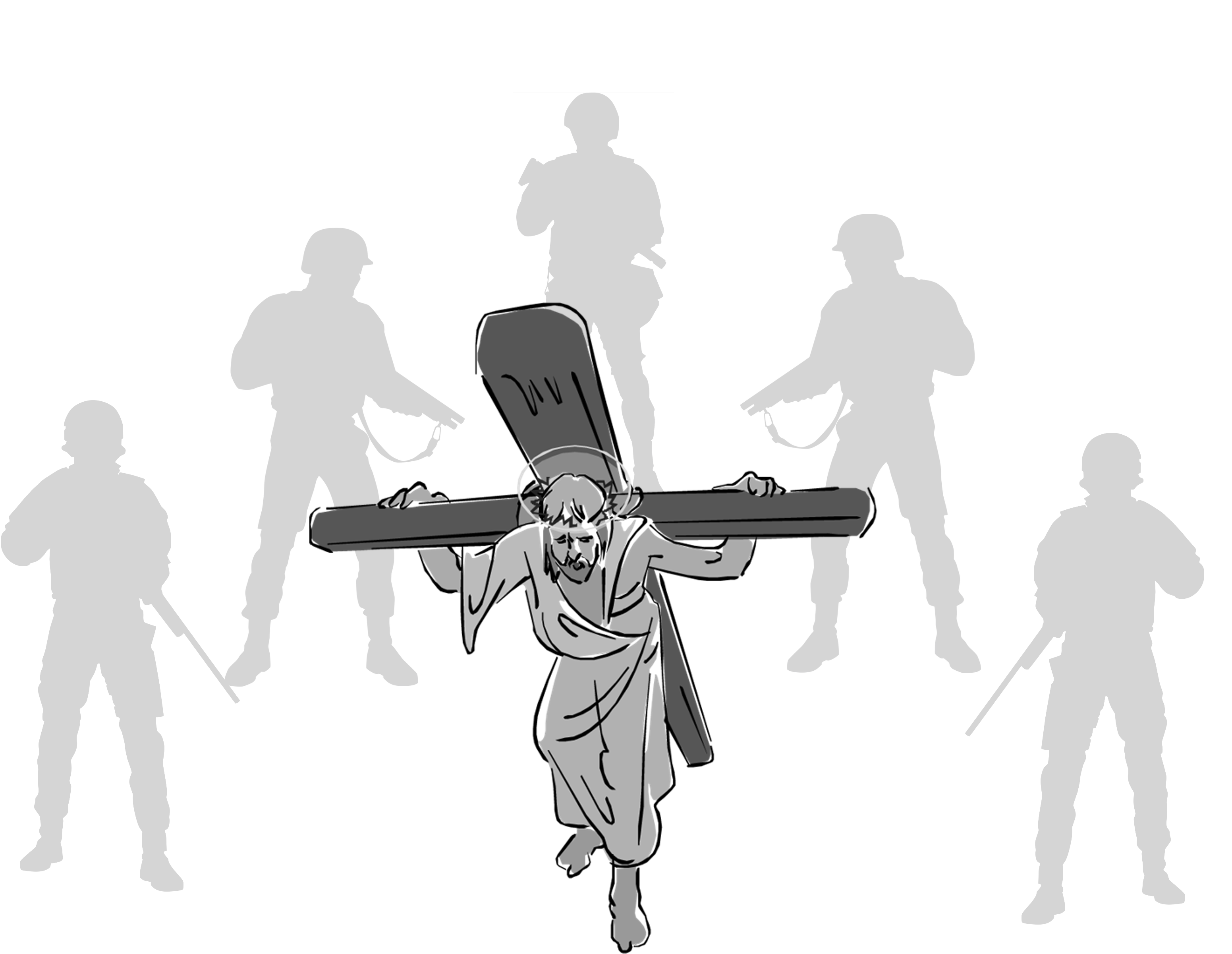
I find the recent murder of Alex Pretti deeply troubling. I don’t like what it says about my government (yes, mine even if I dislike and disagree with almost every policy and position). It makes me scared for myself, my family, my friends and, well, just about everybody. I’m angry that the perpetrators both specific and general will almost certainly go unpunished by our legal system. Though I know my government, my culture, my country has a long and bloody history of violence against anyone counter to the white, moneyed mainstream, I am troubled by the image of someone being disarmed and then shot in cold blood, a war crime by about any definition you choose to subscribe to. Most of all, I am dismayed that anyone would view this outcome as o.k., as somehow justified by a perspective of heightened threat to God and Country (not necessarily in that order).
Quite the stew of strong emotions. I’ve written elsewhere that I find emotions to be useful markers of areas that require attention, time, and action. And also, that those same emotions are horrible sources for both the nature and focus of said action. At best, reactions provide only temporary relief and at worst exacerbate the very problems that first excited them. If I do not want to be complicit (or perhaps more complicit) in the problems we face, then I must first imagine a way of acting that does not perpetuate the very problems I am trying to ameliorate. My experience suggests that if I can find a productive manner in which to act, it almost doesn’t matter what I specifically choose to do. Almost anything done rightly will move the needle on the evolving future in a positive direction.
So, I am writing, my way of finding a path beyond the emotions of the moment to some way of acting beyond reacting. I write to find a truth I can act from, however imperfect my truth or my actions. What I’ve found by the end of this essay is Christ-like love in action, accompanying the marginalized and threatened whether they look like me, think like me or live like me. I will act as if they are members of my family, because they are. I don’t share this as some proclamation of a global truth applicable for everyone all the time. I don’t promise myself or anyone else that acting in this way will magically resolve the terror we inflict on each other. I share it in the hope that as I find my imperfect way down this path and others find their equally imperfect way down their paths we will arrive together at a better place with kinder, more humane ways of being together, living together.
So. Right action, a useful response to our loss of Alex Pretti. In moments involving death, I guess it’s not surprising that thoughts of religion push forward, ways of trying to understand the unexplainable, of shaping whatever actions I might choose to have a positive impact across seemingly impossible barriers. Given my background in the Mennonite communities of faith, it seems like the New Testament, particularly the Gospels might be a reasonable place to start.
Assuming Christianity is about following/applying the teachings of Jesus Christ, what captured his attention, what did he emphasize in his teaching? My impression is that the topic that gets the most airtime is the love, grace, and mercy of the Divine, and of us extending that love, grace and mercy to others as it has been extended to us by the Divine. He felt strongly enough about this to articulate it as a commandment, that we “Love one another as I have loved you” (John 13 34-35). He even went so far as to call it a “New Covenant” between God and humankind. (Luke 22:20). Elsewhere he says we should love God with all our heart and love our neighbors as we love ourselves (Luke 10: 27). Seems like it was important to him and should be for us.
Ok, great. What’s that look like? Again, Jesus is pretty explicit in a number of different places about what that love should look like. In James he goes on for 12 verses and says “Faith without works is dead” explicitly three times in the 12 verses and alludes to it at least two more times. It would seem thoughts and prayers are not sufficient to meet the love litmus test. Necessary perhaps but not sufficient. Christian love is supposed to be active, visible and impactful. At the end of that passage in James, he gets right down to it and says we will be judged by our actions as well as our faith.
The Gospels are replete with examples of Jesus putting love into action, healing the sick, feeding the hungry, ministering to the dispossessed in any guise and calls on any who would be his disciples to do likewise. He comes back to this idea in the parable of the good Samaritan, asking the question of who has best served God in helping a wounded man at the side of the road. Is it the high born and powerful who pass him by, or the reviled other, the Samaritan, who stops and ministers to the man? He finishes the parable with a clear injunction to “go and do likewise” (Luke 10: 37). Like any patient teacher he comes back to this idea of loving action being the hallmark of following him. In James he says “Do not merely listen to the word and so deceive yourselves. Do what it says” (James 1:22). Jesus was clearly not impressed with attempts to ration out the love only to those found to be somehow worthy.
“All well and good for the more-simple times that Jesus lived in but what about us, now?” one may ask. Let me suggest, dear reader, that the times of Jesus incarnate aren’t all that different from the current moment. Ethnic differences simmering (see the whole Samaritan thing). Those who hold power in government, business and society trampling on the common person. (See Jesus’ opinion of Pharisees and Money Lenders in the Temple). Government officials of questionable provenance killing civilians under their authority (See the whole crucifixion thing). From that perspective, Jesus lived in difficult times much like ours. In those difficult times he still focused, first and foremost, on maintaining an active loving response to the world around him. And he did it knowing what lay ahead for him. To suggest otherwise is to denigrate his divinity.
So here I am. Angry at my government, shocked and disappointed in the verbal and physical violence of my neighbors, despairing of the future we are building for ourselves and coming generations. What would Jesus do in this modern day? I see no reason to believe he would do anything other than what he did in his own time, knowing full well the violence and reaction his path would incite. He would put a powerful love into action, manifesting the love, grace and mercy of God to the marginalized and threatened whatever their circumstance… and whatever the cost to himself.
To me, for me, the path is clear if by no means easy. In the Parable of the Talents, Jesus suggests that we are to make the best use of our talents as we are able. If we do our best at accepting God’s love and grace and mercy for ourselves and do our best to share those out to all we encounter with whatever gifts we happen to have, that will be enough. For some that action might be defending people being assaulted. For others, protesting injustice in the streets. Still others will minister to those who are suffering.
One of my gifts is pathfinding, especially in seemingly irresolvable situations. So, I’m pathfinding, trying to put together some idea of a way forward for myself. As noted above, this isn’t a proclamation of some global truth. There are as many different gifts for putting love into action as there are people on the earth. This complex problem of our seeming inability to just live with each other will not be solved with some single magical path forward. There will need to be many paths, paths that accommodate each of our different starting points.
This putting love into action thing almost certainly won’t be easy or clean given our human nature. And Jesus’ love for us didn’t get in the way of him delivering hard messages. I am a little fearful as I write that my words will raise some hackles. More so from the next few lines, but please dear reader, know that I type these words praying the guidance of love in shaping my words and their reception.
If Jesus had a second favorite topic to love in action, it might have been being on guard for false prophets. As I dove into various concordances, excavating Jesus’s teaching on love, I was surprised to find a corollary discussion thread on false prophets. Nearly as many citations as on love. This was apparently an issue of concern with Jesus and given our human addiction to hierarchy and some uber-daddy to save us (religious or otherwise), I can see why. Troubled times create many who claim to have the answer, usually in ways that are of most direct benefit to themselves.
Sure enough, like in Jesus’ time, like in the 1850’s fugitive slave law era, like in the 60’s we’ve got troubled times and we’ve got a whole host of false prophets claiming answers that on closer examination tend to provide most of the benefit to the prophets themselves. Even as I write these words, I’m pretty sure I and all my readers have already identified the false prophets of the other side(s). Let me gently but firmly suggest the most useful endeavor here is not in pointing out the splinter in the other guy’s eye as you ignore the log in your own. As with other topics, I think Jesus has some good advice for discerning the fidelity of a prophet, suggesting in Matthew 7:15 -16, that one can identify false prophets by paying attention to their actions and the outcomes they produce.
The love in action of Jesus was almost always directed to benefit those who needed it most, who were the most threatened by the circumstances they found themselves in. Those who take actions that increase threat and harm to any population are unlikely to be true prophets. Yes, that makes this whole love in action thing more difficult, but again, Jesus pursued it diligently, while fully aware of where the path led.
So go on. Take the first step and identify who you are accepting as a prophet in your own current world view. We all do it, looking for guidance in confusing and troubling times. Go ahead and indulge in a little hero worship. That’s fine. Take your time. But that’s just the first step. Now pick up Jesus’ mantle and assess their actions, look at who really benefits. A socio-religious “follow the money.” See how their words and actions align with their stated objectives.
For my log clouded eyes, there are two clear examples of proclaiming one end while driving another. The attempts of the current administration and its supporters to dress Jesus up in combat fatigues, flak jacket, and automatic weapons, sending him out to terrorize neighborhoods of the “others” doesn’t score very well on that fidelity to the New Covenant. But then neither does the last 50 years of liberal democracies embrace of market economies that reward oligarchs at the expense of the middle and working class.
You don’t have to be a Jesus-caliber person to make love in action happen. My dad sometimes drove my mom a little nuts with his broad definition of family, which was essentially anyone in need of sustenance, be it physical, mental, or spiritual. Sometimes it meant bringing abandoned children into our home (which as a five-year-old, mostly just scared me). One time it meant facing down the local police at our door when we had a black man spend the night at our house. One 60’s summer vacation included a supporting visit to the Southern Christian Leadership Conference in the deep South. I don’t think my dad ever considered it an option to not stand up for the disposed, or to not stand between them and their oppressors.
So. My vision. For myself. Heavily influenced by my view of what it means to follow Christ, by what I perceive to be Jesus’ guidance. Heavily influenced by the example of my dad. I love like I am loved by the Divine. I offer grace and mercy like the Divine showers me with grace and mercy. That is where the promise for a better future lies. To be party to the New Covenant I must act in love, passing along what I am given to all whom I encounter, without exception, whether they look like me, or share my world view, or meet some temporal standard of worthiness.Shanti, y’all.

 The Wondering Pathfinder